
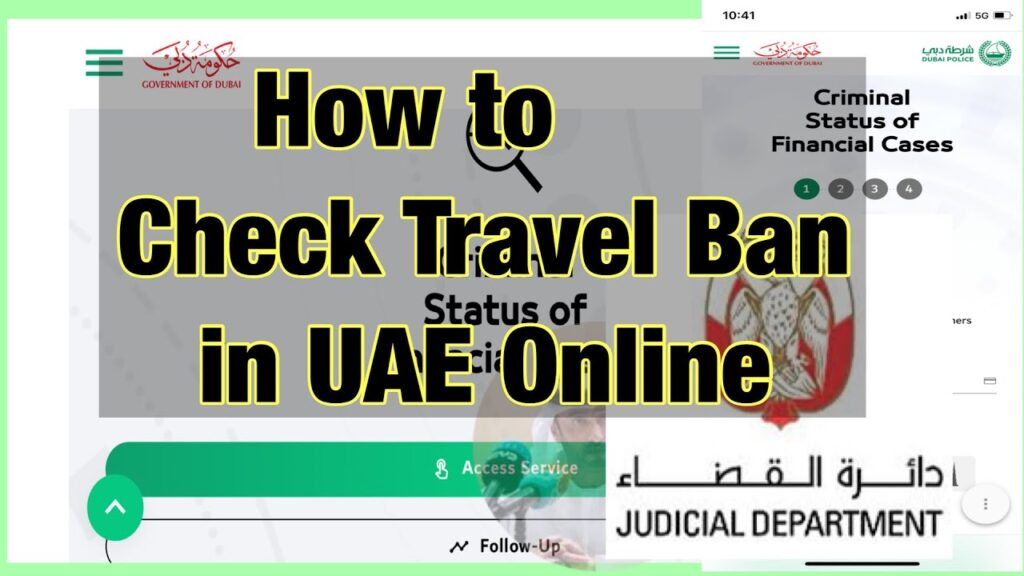
You might have heard the theory that checking your travel ban status in the UAE is complicated, but the truth is, it’s more straightforward than you think. With a few reliable online tools and official apps, you can quickly find out if any restrictions apply to you. However, knowing exactly where to start and what steps to take can feel overwhelming. Let’s explore the clear, step-by-step methods that make this process simple and hassle-free.
Understanding Travel Bans in the UAE
A travel ban in the UAE prevents entry or exit until legal or financial issues are resolved, ensuring compliance at borders. Understanding this helps manage your travel plans effectively.
What is a Travel Ban in the UAE? – A brief introduction
Travel bans in the UAE vary based on different issues, impacting your ability to enter or exit the country. Being aware of these can help you navigate your travel plans effectively.
Types of Travel Bans and Why They Are Imposed
Travel bans in the United Arab Emirates (UAE) can originate from various authorities, including government agencies and financial institutions. Understanding the different types of travel bans, such as financial bans from banks due to unpaid debts or immigration bans enforced by the General Directorate of Residency and Foreigners Affairs (GDRFA), is crucial for residents and travellers. Financial institutions like Emirates NBD and Abu Dhabi Commercial Bank often impose financial bans that may hinder your travel plans.
In addition to financial and immigration bans, labour bans enforced by the Ministry of Human Resources and Emiratisation (MoHRE) can impact your employment status in the UAE. Criminal bans can arise from legal cases filed in the UAE courts, leading to restrictions on travel until legal matters are resolved. Knowing these types of bans enables individuals to take prompt action and engage with appropriate entities, such as legal counsel or financial advisors, to address potential issues.
Financial Ban – Related to debts, loans, or bounced cheques
When financial obligations remain unresolved, the United Arab Emirates (UAE) implements a travel ban system, which restricts individuals from leaving the country until their debts are cleared. This ban often results from unpaid loans, outstanding debts, or bounced cheques, which are considered serious infractions by the judiciary system. Key financial institutions, such as banks and lending companies, collaborate with the authorities to enforce these restrictions, highlighting the importance of maintaining financial integrity.
To lift a travel ban, individuals must settle their outstanding dues or resolve any ongoing court disputes. Regularly checking one’s financial status through official channels, such as the Ministry of Interior or the relevant judicial authority, is crucial to prevent unexpected travel complications. Individuals should ensure they address any financial discrepancies proactively, as this can significantly impact their ability to travel and engage in business activities within the UAE.
Immigration Ban – Linked to residency or visa violations
Immigration bans in the United Arab Emirates (UAE) frequently stem from intricate residency or visa violations that can unexpectedly affect individuals. These violations include overstaying, improper visa cancellations, or absconding reports, often linked to employer complaints. Recognising these causes is crucial for swift action, minimising the risk of travel disruptions, and ensuring compliance with UAE immigration regulations.
| Violation Type | Common Cause |
|---|---|
| Overstay | Remaining in the UAE beyond visa expiry dates. |
| Visa Cancellation | Incorrect procedures during cancellation. |
| Absconding Report | Complaints filed by employers regarding absconding. |
| Residency Errors | Issues with documentation or application submissions. |
The Department of Naturalisation and Residency (DNRD) and the Ministry of Interior (MoI) are key entities regulating immigration in the UAE. They enforce strict policies on residency and visa compliance. Individuals must remain vigilant about their visa status and residency documents. Any failure to adhere can lead to severe penalties, including an immigration ban.
Taking proactive steps to monitor visa expiry dates and ensuring correct documentation can help avoid complications. Engaging with reputable legal firms or immigration consultants familiar with UAE laws can provide invaluable guidance. These professionals can assist in resolving any potential residency issues or correcting visa errors before they escalate into bans.
Labor Ban – Imposed by the Ministry of Human Resources & Emiratisation
If an individual has experienced job loss within the United Arab Emirates, they may encounter a labor ban imposed by the Ministry of Human Resources and Emiratisation (MOHRE). This restriction can prevent them from securing employment within the country for a designated period, typically ranging from six months to one year. The labor ban not only impacts job opportunities but also influences residency visa status, complicating the individual’s ability to remain in the UAE.
Understanding the implications of a labor ban is crucial for affected individuals. The MOHRE enforces this ban as part of its regulatory framework to ensure compliance within the workforce. Therefore, job seekers must be aware of their rights and the necessary steps to navigate the process of obtaining new employment while under such restrictions. Engaging with legal or employment specialists can provide clarity and guidance for those affected.
Criminal Ban – Resulting from legal or police cases
Beyond employment-related restrictions, travel bans in the United Arab Emirates (UAE) can arise from criminal cases linked to legal or police investigations. Authorities such as the Federal Authority for Identity and Citizenship (ICA) and local law enforcement agencies may impose a travel ban if an individual is involved in ongoing police investigations or court proceedings. Depending on the nature of the offense, which can range from minor traffic violations to serious felonies, these restrictions can significantly impact travel plans.
To ensure compliance, individuals should check their legal status with the relevant authority promptly. This proactive approach allows individuals to address any potential issues before attempting to travel, thereby avoiding unexpected complications at UAE borders. Engaging with legal experts or the designated authorities can provide clarity on one’s status and assist in navigating the legal landscape effectively, ensuring informed decision-making regarding travel.
Other Bans – Security-Related Restrictions
When state security concerns emerge, the United Arab Emirates (UAE) authorities, specifically the State Security or Intelligence Services, can enforce travel bans that extend beyond typical legal or financial limitations. These security-related restrictions are infrequent but critical, focusing on individuals whose presence outside the UAE could compromise national safety. Unlike standard bans, the specifics of these restrictions remain confidential, necessitating direct engagement with security agencies for resolution.
Individuals facing potential travel bans should promptly consult legal experts specialising in UAE law. The legal frameworks surrounding these restrictions are stringent, and understanding one’s status is crucial before making any travel arrangements. Engaging with professionals familiar with national security matters ensures informed decision-making and compliance with applicable regulations.
How to Check Your Travel Ban Status (Official Methods)
To check your travel ban status, utilize official online services or visit local authorities for assistance. This ensures clarity on your situation before planning any travel.
Check Travel Ban via the Dubai Police Website – Step-by-step guide
Checking your travel ban status through the Dubai Police (DP) website is essential for ensuring seamless travel to and from the United Arab Emirates (UAE). Begin by visiting the official Dubai Police website. Use your UAE Pass for secure access to the online services. Once logged in, navigate to the “Services” section. There, select either “Circulars and Travel Ban” or “Criminal Status of Financial Cases” to proceed.
After selecting the relevant option, input your Emirates ID number accurately. This is crucial for retrieving precise results regarding any active travel bans. The Dubai Police system will promptly display if any restrictions apply to you, including relevant details concerning financial or criminal matters within Dubai. This method is efficient and regularly updated, making it vital for any traveller to verify before finalising travel arrangements. Consider checking your status frequently to prevent unexpected issues at airports.
Check Travel Ban via the Dubai Police App – App-specific instructions
Checking your travel ban status in the United Arab Emirates (UAE) has never been easier, thanks to the Dubai Police app. This essential application, available for download from both the Apple App Store and Google Play Store, allows users to access critical services related to travel bans. To begin, users must log in securely using their UAE Pass, ensuring that their personal information remains protected.
Once logged in, navigate to the “Services” menu, where you will find options such as “Circulars and Travel Ban” and “Criminal Status of Financial Cases.” By entering your Emirates ID number, the app will promptly display any active travel bans against you within the jurisdiction of Dubai. This efficient method not only saves time but also alleviates the stress associated with travel preparations, ensuring that users have all necessary information at their fingertips.
Utilising the Dubai Police app represents a proactive approach to managing travel-related issues, allowing residents and visitors in the UAE to stay informed. It is crucial for individuals planning to travel to be aware of their legal status, as this directly impacts their travel plans. By leveraging this official tool, users can confirm their travel status anytime and from any location, eliminating unexpected surprises at checkpoints or immigration offices.
Check Travel Ban via the MOJ’s ‘Estafser’ Service – For federal-level/criminal checks
Checking for travel bans in the United Arab Emirates is essential for anyone concerned about legal restrictions affecting their mobility. The Ministry of Justice’s Estafser service provides an efficient method for individuals to verify any travel bans linked to federal criminal cases or court orders. Users can access this service by visiting the Ministry of Justice website and locating the “Estafser” inquiry page under the eServices section.
To initiate a check, users must input their Unified Identification Number (UID), which is available on their residency visa. This system promptly reveals any active travel bans or federal legal claims associated with the individual. By utilising the Estafser service, travellers can proactively discover and address potential legal obstacles prior to their journeys, ensuring a smoother travel experience.
In addition to the Estafser service, individuals should also consider consulting with legal professionals or the relevant authorities if they identify any travel bans. Engaging with legal experts ensures a comprehensive understanding of the implications of identified bans and the steps necessary for resolution. This proactive approach not only enhances travel readiness but also fosters a greater understanding of the legal framework governing travel within the UAE.
Alternative Method: Inquiry at a Police Station or Amer Center – For direct assistance
When online searches yield uncertainty regarding travel bans, visiting a police station or an Amer Centre can provide definitive assistance. Dubai Police and Amer Centre are key entities in this process. To check your travel ban status, bring your passport and Emirates ID to any Dubai Police service centre or a licensed Amer Centre. Staff members at these locations have access to comprehensive government databases, enabling them to deliver accurate status updates. This face-to-face interaction is particularly beneficial if online portals are ambiguous or if you prefer personalized guidance.
However, it is critical to assess the potential risks before visiting a police station. If there is an active criminal arrest warrant against you, visiting could result in detention. Therefore, evaluate your circumstances thoroughly before proceeding. Engaging directly with staff at Dubai Police or an Amer Centre allows for immediate clarification of your situation. This approach ensures you understand the necessary steps to address any travel restrictions effectively, providing a clear path forward.
What to Do If You Have a Travel Ban?
If you discover a travel ban, stay calm and contact the relevant authorities immediately. This will help you clarify the situation and seek resolution effectively.
Immediate Steps to Take – Contact Authorities
Navigating a travel ban in the United Arab Emirates can be challenging, but acting swiftly by contacting the appropriate authorities is essential to resolving the matter effectively. Begin by reaching out to the relevant offices such as the General Directorate of Residency and Foreigners Affairs (GDRFA) or the appropriate court. These entities are responsible for issuing travel bans and can provide clarity on the situation.
Utilising official portals, such as the Federal Authority for Identity and Citizenship (ICA) website, offers up-to-date information regarding your travel ban. It is crucial to seek legal counsel from a licensed UAE lawyer who can guide you through the legal intricacies involved. Organising all communication records and documentation related to your case ensures you have necessary references for any discussions with authorities or legal representatives.
How to Resolve or Lift a Travel Ban?
Resolving or lifting a travel ban in the United Arab Emirates requires a comprehensive understanding of the specific ban type and the necessary steps to address it. First, identify the ban: financial, immigration, labor, or criminal. For financial bans, which often involve entities such as the Dubai Courts and the Central Bank of the UAE, ensure all debts are settled as mandated. Once full payment is confirmed, these bans typically lift automatically, restoring your travel rights.
When addressing immigration bans, involve the General Directorate of Residency and Foreigners Affairs (GDRFA) and resolve any visa discrepancies. Pay any outstanding fines promptly to facilitate the lifting of the ban. In cases of labor bans, acquire a “No Objection” letter from your employer or seek approval from the Ministry of Human Resources and Emiratisation (MOHRE). For criminal bans, engage with local law enforcement to resolve pending legal matters, including the payment of fines or serving any sentences imposed.
Throughout this process, consulting a UAE-licensed attorney significantly aids in navigating the complexities of the legal system. Lawyers experienced in UAE law can expedite the resolution of travel bans and ensure compliance with all necessary regulations. Their expertise will help you regain your freedom to travel efficiently and with confidence, enabling you to move forward without legal encumbrances.
Final Checklist Before Travel
Before embarking on your journey to or from the United Arab Emirates (UAE), it is crucial to verify your travel status to avoid unexpected complications at immigration. The General Directorate of Residency and Foreigners Affairs (GDRFA) and the Dubai Police are essential resources for checking your travel ban status. By consulting these official channels, travellers can ensure compliance with current regulations and avoid potential delays.
In addition to travel bans, confirming your visa validity is imperative. The Ministry of Foreign Affairs and International Cooperation (MoFAIC) provides guidance on visa status and any outstanding fines or violations. Travellers should ensure that their passport and Emirates ID are current and readily accessible, as these documents are vital for a smooth travel experience. Regularly reviewing any communications from financial institutions or legal authorities also helps manage obligations that might impact travel plans.